
Why IT RUN becomes a Strategic Function in 2026

Why 2026 should mark a turning point ?

SLAs measure stability, not business impact, which explains the famous syndrome of Businesses being suffering while all SLA dashboards are displayed in green. We can have 99.99% availability of an application for example, while businesses are encountering a poor user experience !
Companies should reconsider the new digital reality in 2026: IT is no longer a “support service” for the business, the Digital platforms become part of the business core. For example, Manufacturing operations rely on real-time MES and IoT monitoring to produce goods, E-Commerce platforms become revenue engines, and majority of bank transactions are executed through the core banking systems. Consequently, when we have an IT incident we are no longer talking about an “outage”, we are rather experiencing a revenue impact, thus making IT RUN inseparable from business performance.
Technology failures are now visible at executive level: Minor latency or degradation can generate measurable losses, AI automation depends on stable and high quality data pipelines, and Cybersecurity incidents can carry reputational, regulatory and legal risks.
Business leaders now expect IT RUN not merely to maintain system stability, but to actively safeguard revenue streams, enhance user experience, protect brand reputation, and directly contribute to measurable business outcomes.
Strategy shifts
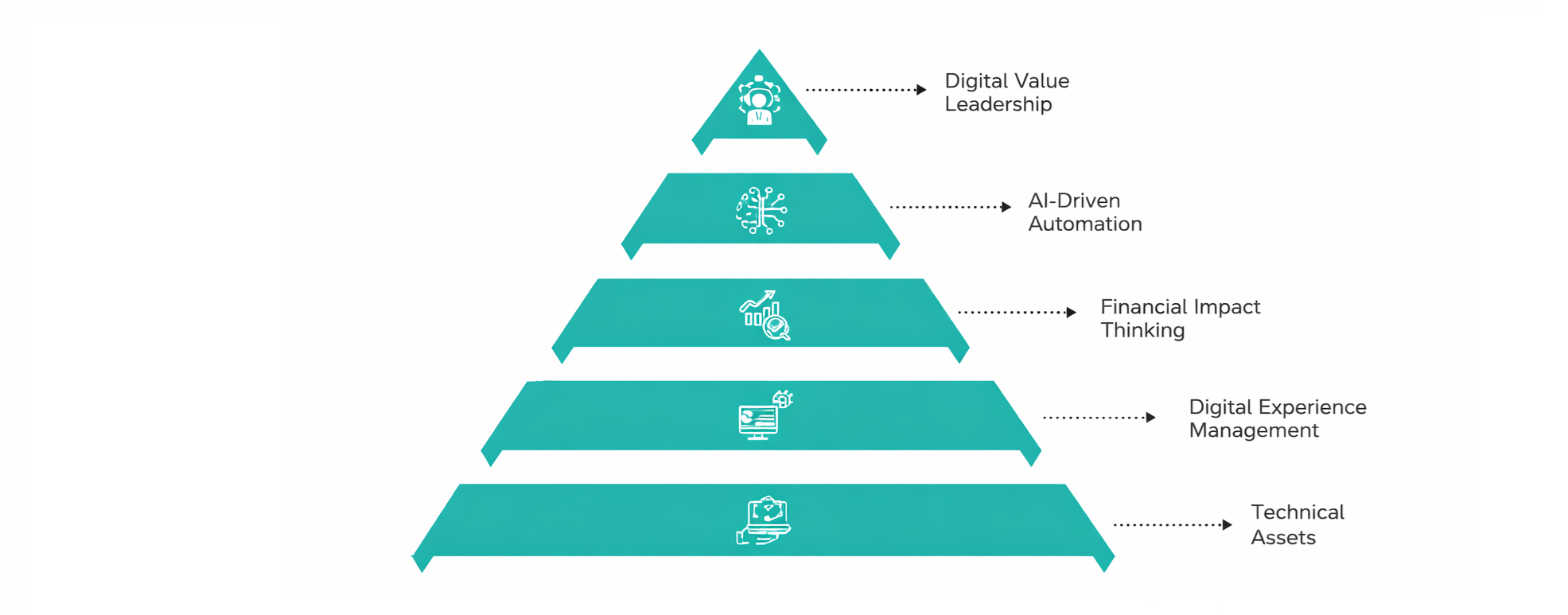
In 2026, IT RUN evolves from fixing incidents to actively managing digital experience and business perception. The focus is no longer limited to restoring service quickly - it is about ensuring users never feel disruption in the first place.
In 2026, IT RUN is no longer evaluated only on technical stability — it is accountable for measurable financial exposure. The organization must quantify, report, and actively manage the economic impact of technology disruptions, and also closely demonstrate the contribution of its digital platforms to the company’s financial results.
In 2026, IT RUN cannot scale effectively without automation and artificial intelligence embedded into its core operating model. As system complexity increases and user expectations move toward real-time responsiveness, manual incident handling and reactive monitoring become operational bottlenecks. Automation is no longer a productivity improvement initiative - it is a structural requirement for stability, efficiency, and proactive service management.
As IT RUN becomes directly linked to revenue, resilience, and business performance, leadership roles must evolve accordingly. The modern IT leader is no longer purely technical — He becomes a “Head of Digital Value” and must operate at the intersection of technology, finance, and business strategy, translating operational performance into measurable value.
From technical manager to value leader: Shift focus from infrastructure supervision to business impact management, financial accountability, and strategic alignment with enterprise objectives.
Communication with CFO & COO: Act as a bridge between IT operations and executive leadership by translating system performance, risks, and investments into financial and operational insights.
Data-driven decision-making: Base prioritization, investments, and improvements on measurable metrics such as revenue impact, cost efficiency, risk exposure, and experience indicators.
In 2026, IT RUN is no longer a hidden operational function measured by uptime percentages and ticket resolution time. It has become a strategic capability that directly influences revenue generation, customer experience, financial performance, and enterprise resilience.
Organizations that shift from SLA-centric management to value-driven operations — powered by digital experience management, financial impact thinking, AI-driven automation, and strong value leadership — will transform IT RUN into a competitive advantage.
The future belongs to companies that treat technology operations not as a cost to control, but as a business asset to optimize, protect, and scale.

Why IT RUN becomes a Strategic Function in 2026
Why IT RUN becomes a Strategic Function in 2026

Why IT RUN becomes a Strategic Function in 2026
Why IT RUN becomes a Strategic Function in 2026
Why IT RUN becomes a Strategic Function in 2026
Why IT RUN becomes a Strategic Function in 2026
Learn how we can help you achieve similar results with a customized digital transformation strategy.
